Wednesday, July 9, 2014
Shadow and Stick Compass
Not my favorite video, but this is a concept everybody should familiar with. It is a very simple way to find an East/West line if you are lost and without a compass. Just be aware that the sun is in the North if you happen to be in the southern hemisphere, so any Aussies watching should reverse the last bit. The East/West line always remains the same.


Tuesday, April 22, 2014
Monday, August 26, 2013
P38 can opener


One of my daily carry essentials, the P38 can opener. Developed in WW2, it was the standard issue can opener used to open military rations. Used all the way up until the advent of MRE's (meals ready to eat) in the early 80's. It is a much smaller, and lighter alternative to a standard can opener. It's foldable and easily stores in a wallet or on a keychain. At a price point of under a dollar you can't beat it. Pick one up on Amazon or at any military surplus retailer.
Wednesday, August 14, 2013
Regularly inspect your ammunition
Firearm safety is of utmost importance to me. Properly maintained firearms and safe practices are the best way to avoid accidents. One thing that I used to give little thought to was my ammunition. I rarely purchase low quality ammo, and I don't reload my own. So what could go wrong with factory loaded ammunition? Lots apparently.
 A few years back I got my full carry license, carried nearly every day since. My first choice for carry ammunition was Hornady TAP. Being that they are expensive, I rarely used them at the range. I ran a box through it with no issues, so I loaded them up and carried them in my gun for about a year. Then Hornady comes out with "TAP, Critical defense." So I picked up a couple boxes and brought them to the range to see how they would run. I decided to blow through the old carry stuff since I would be switching over anyway. To my dismay, my gun jammed up after every shot. So I load some target rounds, with no oiling or cleaning the gun runs fine, the ammo is the culprit. Upon closer inspection I notice that every round that had been in a magazine for over a year, was slightly egg shaped. The pressure from the magazine spring, pressing in one spot, for months and months, had deformed them all. So lesson learned, cycle through your ammo, unload and reload magazines regularly to prevent this. I haven't had this problem since.
Fast forward about two years, I have now purchased a Springfield 1911 in .45 caliber. My first choice again was Hornady TAP, Critical Defence in .45 +P. I had issues immediately, I was unable to unload the gun after a round was chambered. Very scary situation. Finally, I was able to force the slide backwards ejecting the round. So after some Googling, and some show and tell at the gun shop, we determined that Springfield handguns with "match" barrels don't have the headspace needed for these specific rounds. So back to regular old TAPs in this gun.
 For those that don't know, 1911 is a big, heavy gun. The .45 is also a very powerful cartridge. This means that the recoil spring in the gun is comparably heavy, making the slide mechanism have quite a bit of oomph when loading the next round. Too bad that this can mean major damage to shells when they don't eject properly while unloading a live round. I have had a multitude of damaged bullets from this. The damages include bent cases, dented cases, and probably the scariest one, pressing the bullet further into the case. I have never seen anything like this before, but there it is. (pictured left) The reason this is so bad is because the bullet being pressed further into the case will increase the pressure when it is fired. This slightly shorter bullet could have resulted in a blown up gun. (worst case scenario) So when unloading a gun, point down and away from anything, eject the magazine and pull back firmly on the slide. The live round should eject normally, if it doesn't, lock the slide back and remove the jammed round.
My practice now is pretty simple to avoid these issues. I clean all my guns once a month, (a good practice to be in anyway) while doing so I empty all magazines and inspect every round. I lightly oil them as well with Rem oil from a spray can, I find this helps prevent corrosion and reduces jamming. In addition to that I inspect any live round that I eject when unloading my carry gun.
 A few years back I got my full carry license, carried nearly every day since. My first choice for carry ammunition was Hornady TAP. Being that they are expensive, I rarely used them at the range. I ran a box through it with no issues, so I loaded them up and carried them in my gun for about a year. Then Hornady comes out with "TAP, Critical defense." So I picked up a couple boxes and brought them to the range to see how they would run. I decided to blow through the old carry stuff since I would be switching over anyway. To my dismay, my gun jammed up after every shot. So I load some target rounds, with no oiling or cleaning the gun runs fine, the ammo is the culprit. Upon closer inspection I notice that every round that had been in a magazine for over a year, was slightly egg shaped. The pressure from the magazine spring, pressing in one spot, for months and months, had deformed them all. So lesson learned, cycle through your ammo, unload and reload magazines regularly to prevent this. I haven't had this problem since.
Fast forward about two years, I have now purchased a Springfield 1911 in .45 caliber. My first choice again was Hornady TAP, Critical Defence in .45 +P. I had issues immediately, I was unable to unload the gun after a round was chambered. Very scary situation. Finally, I was able to force the slide backwards ejecting the round. So after some Googling, and some show and tell at the gun shop, we determined that Springfield handguns with "match" barrels don't have the headspace needed for these specific rounds. So back to regular old TAPs in this gun.

My practice now is pretty simple to avoid these issues. I clean all my guns once a month, (a good practice to be in anyway) while doing so I empty all magazines and inspect every round. I lightly oil them as well with Rem oil from a spray can, I find this helps prevent corrosion and reduces jamming. In addition to that I inspect any live round that I eject when unloading my carry gun.
Thursday, May 16, 2013
Surviving the next Sandy


I will touch on food only briefly, just think of three simple meals per day, per person. (Non-perishable of course) Might be a good idea to avoid foods that require cooking, think of soup, spam, stuff like that. Personally I like to stock up on rice and dried beans, the main reason is that they're cheap and last indefinitely if kept dry. These do require cooking but if you have a camp stove or a generator (or the simple ability to make fire) this isn't a problem. For simple indoor cooking I like Sterno, they work well and it's easy to cut up a soup can to make a little stove. Make sure to buy the name brand ones though, they are the only ones I've found that guarantee safe use indoors. I also have a butane stove from MSR that i really like. (purchased at Eastern Mountain Sports) If you can spare the cash commercially available emergency food is a good bet. Most of them are freeze dried and require boiling water. A really good option are military style MRE's. (Meals ready to eat) These can be opened up and eaten as is, or warmed up. Some even come with a heater that uses a chemical reaction to heat your food, it only requires a couple ounces of water to do so.
-First thing in your kit should be flashlights. Buy good ones! Cheapo flashlights are not bright, unreliable and they chew through batteries. Mini Mag Light LED is a cheap, reliable option. They will run about four hours on one set of batteries. Swap new batteries into the kit every two years.
-Next have a mylar survival blanket for each person in the house, you can get them in the camping section at any store that has a camping section. You never know how long the power will be out, or how cold it will be while it is.
-A good first aid kit is important to have in the house any way, build one or buy one.
-A bunch of guns. Not for everyone, I know, just saying is all.
-At least two road flares, important for signaling for help.
-A crank or battery powered radio.
-Two lighters and matches. The best kind to get would be the strike anywhere waterproof ones. (camping section)
-At least six 9 hour emergency candles (camping section as well)
-A solid muti-tool is a must, if you don't know your knives you can't go wrong with a Gerber, they sell them at Dick's. I prefer Columbia river, they sell them at Eastern Mountain sports or on Amazon.
-Some kind of water container is possibly the most important, at least five gallons worth per person. With flooding comes sewage and seawater, possibly contaminating the drinking water supply. Fill your containers before the storm and if there is flooding, do not trust the tap water until it is deemed safe. If you don't have a container, fill the bathtub.
When you get the news that a storm is coming, go through and check the kit, test batteries and check your water supply. You should also pack a bag for each person in the event of an evacuation. I also cannot stress enough how important cash is. If phone lines are down and power is out, you cannot use your debit card or withdraw money at the atm. If you are evacuated a couple hundred bucks will be a good thing to have with you. And yes, you should have a full tank of gas. A good rule of thumb is to always keep a half tank in your vehicle, true for hurricanes and the zombie apocalypse.

Having now covered the basic survival end of things I want to talk about one of the simpler things. As we have seen, people in the city were desperate to simply charge their phone. It may sound stupid, but a charged phone could be a lifesaver. Not just from boredom, but in the event of a medical emergency, or to simply let a loved one know that you're ok. If you have a smartphone, and no way to charge it, turn the damn thing off. Change your outgoing message to reflect that, and turn it on a few times a day to check it. If you have a car, make sure to have a car charger, worst case you can charge it out there. If you don't have a car you're gonna have to plan ahead. One of my many contingencies is a solar backup battery, I did a post on it a few months back. (Solar Battery Backup) This thing is pretty cool, and it can give you about a charge and a half before it dies. As long as its sunny you can top it off all day and charge at night.

For a longer term solution, I have a D/C system set up in my closet, using two car batteries and a solar panel. I did a quick video on it awhile back. (Be inventive) This is a bit ambitious for most. The simple way to make one of these small systems is an automotive jump box and a 12 volt solar panel. These can be picked up at place like Autozone or Advance auto parts for under 150 dollars. Most of these jump packs have a 12v power outlet you can plug a car charger into. So just keeping it plugged into the wall until the power goes out will probably give you enough to charge your phone for a week.
Saturday, May 11, 2013
When riding the train
Many of us spend a good part of the day traveling via public transportation. I'm not a commuter myself but I am currently riding the train on my way to Grand Central. Travel by train is incredibly safe, much more so than by car. Same goes for buses and airplanes. This being said, when things goes awry on these types of transport, it can be disastrous. So heres few tips for traveling via train. These are easily applied to bus and air travel as well.


-Update, 5/18
 Thankfully no one was killed, but yesterday at 6:10 pm there was a derailment on a Metro North train in Connecticut. About 60 people were injured, 5 critically, when a New Haven-bound commuter train derailed and struck a Manhattan bound train on the track beside it. It is unclear as of yet what caused the derailment.
Photo courtesy of NY Daily News.
First things first, choose your seat. (Whenever possible) I prefer to choose the seats at the ends of the train when the train is a bit empty. Gives me four seats to spread out a bit, and usually a power outlet. Another big advantage to these seats is also the close proximity to the doors and your choice on direction to face. Being near the door is a no brainer, but the direction you're facing in the event of a crash can minimize injury. Facing backwards limits the likelihood of being thrown from your seat. Admittedly it would be of little help in a derailment, but I feel it can't hurt.
Next know your exits. Make sure you have two exits in mind at all times. Count the number of seats to each, so you can reach them in the dark. (You should have flashlight on you, I carry a penlight in my pocket at all times) If you aren't seated by the doors I recommend sitting in an emergency exit row. Even when seated in this row, be sure to memorize the route to the nearest exit on the opposite side of the train. If the train becomes derailed it is very likely that your car will be on its side when it comes to a stop. Read the directions on how to operate the emergency exit a couple times so you don't have to do so under duress. Take note of where emergency tools are located as well. On my train there's an emergency pry bar above the exit closest to me and the emergency door controls are to my left.
The more likely emergency that you will encounter would be something like a fire. This is unlikely to be a real emergency as the car you're on catching fire is near impossible. A diesel locomotive can catch fire, but there are many redundancies to keep that fire from spreading to the passenger cars. In this scenario, passengers panicking is probably the bigger danger. All you can do is pay attention and keep calm. I also like to keep all my stuff together in my bag so I'm not scrambling if they evacuate the train.
These scenarios are highly unlikely, but don't be complacent! Being aware of your surroundings becomes second nature very quickly, and takes no time at all. Those few moments of looking around while choosing your seat could save your life.
-Update, 5/18

Read more at NY Daily News
Photo courtesy of NY Daily News.
Thursday, March 21, 2013
Monday, January 28, 2013
Henry Ar-7 Survival Rifle
 First impressions, well made and sturdy, despite the light weight. Solid construction and ease of use make it the perfect survival weapon. The light weight and low recoil make it feel like the ideal weapon to hand off to a novice shooter. Right out of the box it fired dead center at 25 meters and 3 inches low and left at 50. Had it firing consistently within the 20 ring in minutes. Over the day at the range I fired off about 280 rounds... with 6 malfunctions. Normally I would consider this pretty bad, but all but one were misfeeds on loading the first round. I think the issue was mostly due to the hollow point ammunition I was using. All I shot was CCI high velocity hollow points in 36 grain. I didn't have an issue until after the 200 round mark, so I think lead fouling was a bit of an issue. From what I have read these rifles don't like hollowpoints, that is all I shot today so I guess I did pretty well. The only malfuction I had while firing was a stovepipe ejection. For those that don't know this is when the empty shell lodges in the ejection port. Other that that all malfunctions were on loading the first shell.
Overall I think that the benefits of this rifle handily outweigh its shortcomings. I don't have any reservations about adding this rifle to my kit. Aside from the couple misfeeds I had, the rifle shot well and was accurate enough to hunt with. Firing a consistent 5 inch group with hollow points is just fine at 50 meters, and at 25 the groups dropped to about three inches. Did I mention it's fun as hell to shoot?
Saturday, January 19, 2013
Merrell Minimalist Shoes

There are a lot of these out there from nearly all running shoe manufacturers. I decided on a pair of Merrells, the "Barefoot Run Trail Glove". (wide width) The reviews were excellent and they had Vibram soles. The wide toe box was a nice selling feature as well. First impressions were not great, they seem a little cheaply made for the 110 dollar price tag, I heard a few stitches rip when using the heel loop to put them on the first time.
When I did finally get them on they seemed pretty comfortable. (I knew that they would be difficult to fit at first, I'm used to this with Vibrams) I immediately noticed an odd feeling that I was facing uphill, almost as if the heel was lower than the front of the shoe. An odd feeling at the very least, but not horrible. I think it has something to do with the fact that they are supposed to be running shoes. The wide toe box is very nice, and they feel very secure going up and downhill. The following day I wore them to work, after that day I wasn't quite sold. The low heel makes it feel like you're doing toe lifts all day, something I've never experienced with a minimalist shoe. They also aren't very grippy on tile floors, not an issue on pavement or dirt, but an issue for daily use. I didn't want to make a decision based on one day so I gave it a week. At this point I've gotten used to the quirks and I'm fairly happy with them. There was certainly a transitional period where my shins hurt and my feet would cramp a bit. I went through the same thing when I went to Vibrams, but it passes quickly. Now aside from traction issues indoors, they work pretty well for my purposes. I'm sure for trail running or hiking they would be absolutely perfect. I really don't see myself ever choosing them over my Five Fingers, but on a cold day the ability to wear thick socks might make these tempting. For work they're passable, though they offer no protection in the shop, they look enough like sneakers that no one would question them. I would certainly choose them over a boot any day, but they don't even come close to the comfort of my Five Fingers.
Update 8/14/13
I have now been wearing these to work everyday for eight months. I gotta say, no complaints here. (just don't expect them to be waterproof at all) They have certainly held up better than any of my Vibrams have. I'm nearly through the tread and I've had nothing break down on me at all. They are light, comfortable and durable. I only wish they had toes.
Saturday, January 12, 2013
An Apocalypse Survival Christmas 2
So this is survival Christmas number two! Sorry I couldn't get this one out sooner, been a busy few weeks. Well it seems we have all
survived the 2012 apocalypse then, oh well, I think we were all
secretly hoping for it. Those who know me well enough to buy me a gift,
I'm sure you've noticed my Amazon wishlist has a bit of a theme. Pretty
much an even mix of survival gear and vinyl records. Apparently even
with the survival gear I still qualify as a hipster. For the most part I
have about all I need (or can afford) for gear. I certainly have way
more than I can carry, so why more? It just seems like every time I feel
like I have it all, I find out about some awesome new thing that must be
mine.
 My first gift this year was from my dad, a Smith &
Wesson tactical pen. (Pictured right) There are a few of these types of pens out there,
but I haven't really heard to much about them. The basic idea is an
aluminum pen with a decent point at one end that can be used as a
stabbing implement in a defensive situation. Now hopefully I won't have
to resort to my pen for self defense, but you never know. Ideally I
carry a firearm on my person at all times, but there are dozens of times
a month I would say, where this is not an option. For instance when I
head down to the city, or when at work. Now usually at these times I do
have some kind of weapon on me, generally a knife at all times and the
addition of my Kimber pepper blaster when visiting the five boroughs.
Now the very few times that I would be without either I would say is if I
left my knife at home by accident when I headed to work. This is a
pretty rare occurrence. Being a mechanic I utilize a pocket knife dozens
of times in a day, making my lockback as important to carry as my
wallet. This being said, I like to have at least one backup for every
piece of gear I own, and dual purpose items are a plus. I need a pen at
work anyway, so it might as well have a tactical purpose. Now I know all
of these factors are extremely unlikely to occur all at once, but I
prefer to hedge my bets. So lets assume I head to work and forget my
knife, then head to lunch with some of the guys. For the most part the
guys at work are all into this kinda stuff, but there are a few that
would be unnerved by "lemme just run out to the car and grab my gun." So
in these situations, the weapon is safely locked away (unloaded and
cable locked) in the glove box. In this highly unlikely situation, I
would be completely unarmed. In my youth I would never have had a
problem with this, but a couple pulled back muscles and an old ankle
injury have made me question how well I could really handle myself in a
fight nowadays. Something solid to defend myself with is just as much a
sense of security as it is a real asset, so I'll take it.
First impressions of it are that it feels pretty solid,
with a nice clip that is bolted on with two torx screws. This was one
reason that this model caught my eye. Many of them have a clip that is
attached with a semi-circle of metal that can easily pop loose when
snagged. An issue I constantly run into with Streamlight pen lights.
(more on that in a bit) One surprise was that it had a screw on top,
making the "stabby" end the bottom of the pen. The top unscrews from the
main body of the pen and sits on the pointy bit while writing. At first
glance on the internet it looked like a click or screw type
retractable. Not really an issue that affects performance, but with
daily use it is a little more annoying to be constantly unscrewing the
top to use it. As far as quality it is akin to a decent quality aluminum
flashlight. The screw doesn't have a seal of any kind so submersion in
water probably wouldn't be an option. Though all that would be damaged
is the refill, I won't be checking how well the machined aluminum seals
until I have a refill in hand. The only major disappointment in the pen I
would say is that it's kind of a crappy pen. For stabbing, seems great,
pen part not so much. Writing feels like a cheap-o bic. Admittedly I am
a bit of a snob in this regard, preferring Uni-ball or Pilot Precise
for daily use. Hopefully the refill is a common type, allowing for the
option to upgrade to a fountain or higher quality roller ball.
Overall seems like a good deal, especially since it it only costs about
20 dollars on Amazon. For something like this the thing you need to
consider is that you can't plan for everything, and sometimes you cannot
justify paying a lot for something you will hopefully never use. Until I
hear of someone actually having to use this, there is just no way to
know what the performance will be. All I can put forward is that it's a
working pen, and I would not want someone to stab me with it.
Another
gift I got (also from Dad) Is the Streamlight ProTac 2AA LED
flashlight. (Pictured above) I have owned one in the past but had lost it. I am extremely
happy with pretty much any Streamlight product I have used. I believe I have reviewed them before so I won't be too long
winded with this one. Solid, durable and reliable, you really can't go
wrong with this light. With a 120 lumen max output it is really bright. It has a 1.75
hour run time on the highest setting, 4 hours on the low setting. It
also has a strobe feature and a rubber push button tail cap. Excellent
tactical flashlight and small enough for everyday carry in your pocket.
The only real down side to this light is the clip, if it gets snagged on
something it goes flying. I have had this issue with all of my
penlights from Streamlight. I think I have four or five AAA versions
missing the clip. If you were to use the included nylon holster this
wouldn't be an issue I suppose, but I just have too much crap strapped
to myself already.

With the help of Christmas money I was able
to finally purchase a decent bicycle, something I have wanted for a long
time. A bike is something everyone really should have, It's great
exercise, (something I certainly need) as well as a gasoline free form
of transportation. Just seeing the panic that ensued at the pumps after
hurricane Sandy, I can only wonder what would happen if there was a
national fuel crisis. With my bike I could get back and forth to work
and the store, albeit much more slowly. At about 10 miles it will be a
bit of a haul to work but it is doable. I look forward to giving it a
shot when it gets a bit warmer. When I went to get my bike I had a
Cannondale Quick CX in mind. Msrp was around the 600 dollar mark. What I
really wanted was the higher end one with disc brakes, unfortunately
way out of my price range. So while at the store I asked about some of
the other brands to see if there was something comparable in my price
range. The salesperson suggested a Specialized Crosstrail. All the same
features of the Cannondale I wanted, but below the 600 dollar mark. I
felt the disc brakes were more important than the brand, so after some
quick Googling of reviews on my phone, I went with his suggestion and I
am very happy with it. Riding around the city of Poughkeepsie, the
ability to stop on a dime makes me feel much safer. When selecting a
model, front suspension and slightly aggressive tires were important to
me. I like being able to cut through parks and hop up and over curbs
easily. Though I don't think this particular model would be great on the
trail, it works well for mild off road use. Today after work will be my
first long distance ride, hoping to get 20 miles in before dark.
Sunday, December 23, 2012
My Review of VIBRAM FIVEFINGERS Men's TrekSport
Originally submitted at Eastern Mountain Sports

With an emphasis on traction and performance, the FiveFingers TrekSport features a cleated 4 mm Vibram rubber outsole and a Coconut Active Carbon upper for natural breathability and abrasion resistance.
Five fingers will change your life.
By Captain Hitop from Poughkeepsie NY on 12/23/2012
Sizing: Feels true to size
Width: Feels too narrow
Pros: Comfortable, Durable, Lightweight
Cons: Not Water Resistant
Best Uses: Mixed Terrain, Grass, Around the house, Rocky/Unstable Terrain, At The Gym, Everyday, Paved Trails
Describe Yourself: Recreational Walker/Hiker, Survivalist
Was this a gift?: No
Vibram five fingers are by far the most comfortable shoe you will ever wear. I have been wearing these every day for about a year and I now own three pairs. They are really comfortable and lightweight. Humans are not built to wear shoes, so why wear something that is bulky and impedes natural movement? Ever since I started wearing these all my back problems have dissapeared. I feel less fatigued after walking and they are just flat out more comfortable. They can be a bit cold in the winter so I recommend buying a pair a size up to accomodate socks. My only complaint is that they no longer make this model in leather, and that they don't offer enough models in earth tones. Try them out, they will change your life.
Bailey, uninterested in my new footwear...

Tags: Using Product, Picture of Product
(legalese)
Tuesday, December 18, 2012
Tinder

The first can be made at home or at the campsite, it's called charcloth. To make your own charcloth start with any cloth made of 100% cotton. Place it inside a tin that can be sealed, an Altoids tin works well, and puncture a small hole in the top with a knife. Place the tin in the coals of a fire and give it about five minutes, it should stay in until you can no longer see smoke coming from the hole. Remove the tin and once it's cool check the cloth. It should have turned totally black and be very delicate, ripping easily. The cotton has now turned to pure carbon and will take the tiniest spark. Keep it dry and it will light first try every time.
The second is simple steel wool, found at places like Home Depot or any automotive shop. Steel wool takes a spark easily and will glow red hot when blown on. Lighting it with a match works well too. Placing a 9 volt battery on the surface of the wool will also cause it to ignite.
Cattail is going to be the easiest to spot, everyone knows what they look like. Not only are they edible, but at this time of year they are great when gathered for tinder. By now they are all dried out and the normally densely packed seeds have now turned to a fluffy white mass. Simply place in the middle of your tinder bundle and drop in an ember. If they are still fresh and brown they can be dried for a few days after breaking them off the plant.
 The fourth is a bit harder to find, It's called Chaga. Chaga is a fungus that grows exclusively on birch trees. Birch bark has an oil in it that is extremely flammable, and this fungus absorbs this oil. Birch bark itself is an excellent fire starter, but this stuff takes it to a whole other level. Once it takes a spark it's actually hard to put out. I carry a chunk with me in my bag at all times. To find it you want to look for a large black mass growing on a birch tree. When broken open, it's a reddish orange inside.
Wednesday, December 12, 2012
Maxpedition Fatboy Versipack

Those that know me have seen my "Survival Attache" before. When I first got into all this survival stuff I realized that in order to be prepared at all I would need more than what I could carry. So my approach has become somewhat akin to not keeping all my eggs in one basket. If I lose one cache of gear, I have another backup. The basic idea is to have everything you need to survive within your home. Then to have enough to survive till you get home within your vehicle, and enough to survive till you get to your vehicle on your person. Go bags are pretty easy, just imagine you're going on a camping trip with the possibility of being robbed or shot at. Now it is certainly not possible to carry all that crap around with you all day, but you can carry the basics. I won't go into everything I carry as I already did a blog post on that. ( It's not a purse, It's a "Survival Attache" )

 What I want to talk about is my new bag, the Maxpedition Fatboy Versipack. I heard about these bags from an ad in a magazine, they looked pretty good so I did some research. The reviews were overall very good aside from the occasional complaint that it was too small. (I can see that complaint, it seems bigger in the picture. If you want something bigger they do make the jumbo model, which I haven't checked out yet. ) There are many options with these bags, for this model there is the regular one and the GTG. This is the standard one. (The video below illustrates the differences) So you will have to decide what suits your purposes best.
First impressions are, damn, this may be too small. After a few days though that feeling has passed. It really forces you to prioritize. So I am carrying a smaller water bottle, but all the other essentials I was able to fit after organizing a bit. The construction is very heavy duty and it is quite obvious this will outlast my off brand bag. With many pockets and compartments it makes excellent use of the limited space and has molle style webbing so it can be expanded if needed. The major selling point for me was the dedicated concealed carry pocket at the back. Any hook and loop (velcro) universal holster fits but you can get one right from them for about ten bucks. The bag being a bit small it wont accommodate my 1911, but the XD fits (barely) and my little Smith and Wesson is the perfect size. If you don't plan on using it for this purpose the back pocket would still come in handy.

My complaints are few, but they should be noted. The "cell phone pocket" is a joke. Even a bottom shelf free phone barely fits. You could never fit a smart phone in it. The GTG model has eliminated this pocket, and put molle webbing in its place. I wish this was the case for mine, but I decided the rear pocket with the molle and the magazine pocket was worth the sacrifice and went with this model. I do wish my 1911 would fit, but I didn't expect it to. I am not a fan of off body carry, and rarely do it. If anything I wanted options. Now if I'm just running out in shorts and a t-shirt I can sling the bag with the .38 in it and not worry about a bulky holster. It also gives me an option for a backup in the bag with a primary on my hip. My final complaint is that It's made in Taiwan. Now I am not one to avoid a product based on it's country of manufacture, I would just prefer it was made here. If it is a quality product, I will deal with it. Overall an incredibly comfortable and well made little bag. At 78$ it seems like a very good deal. The quality being way higher than many bags I've seen. The bag can be purchased through the Maxpedition website, but I found it a bit cheaper on Amazon.
Monday, October 22, 2012
Springfield Operator 1911
 Wanted to do a quick review of my new pistol, the Springfield
Operator. This pistol is one that I've wanted for quite awhile, but
never could afford. It's part of Springfield's loaded series of 1911
pistols. This one in particular was co-designed by Springfield Armory
and the US Marine corps. The idea behind this weapon is to take all the
aspects of a highly accurate competition 1911 pistol and apply them a
rugged, all steel 1911. The result is quite impressive, I never knew I
could shoot this well.
A little background on the 1911. It was designed by John Browning and adopted by the US military in 1911. Being that it is still in use today, it is the longest running firearm used by any military in history. (Shotguns possibly being the exception to that, but that's more of a class than a model) The 1911 platform is widely agreed upon by most shooters as the greatest handgun ever made. With a manual safety and a grip safety it was also a very safe gun to carry. With the harder hitting .45 caliber round it was an obvious choice for military use. Even today we are seeing a move away from the 9mm cartridge by many military entities. Opting now for more specialty cartridges including .40 caliber, and using old standbys like the .45 caliber.
There are literally thousands of choices when it comes to a 1911 purchase. My reasoning behind this purchase was mostly due to reputation and brand loyalty. It also helps that this model comes Olive Drab. One thing that I knew I really wanted was an integrated accessory rail. This is not all that common in the 1911 world, but is starting gain some momentum. The ability to attach a light and laser is a great thing to have. The added weight of the frame also helps with recoil and muzzle rise, lending to faster follow up shots. Weighing in at 42 oz. it is a very heavy gun, but I kinda like that about it. They do have the lightweight operator, with an aluminum frame, which is much lighter at 32 oz. If the full steel frame is too heavy for you it would be a good option.

Shooting this gun is by far the best time I've ever had shooting a pistol. The added weight makes the recoil completely manageable, and speed shooting is cake. This is a gun that even a novice shooter could stack bullets with. The large grip may make it tough for some, but with average to larger hands it's quite comfortable to shoot. The only downside I have noticed is that 7 rounds in the magazine goes quick. You really need to practice reloads.
Being a New Yorker we have to deal with a ten round maximum in any magazine manufactured after 1994. So the seven round magazines arent that much less capacity, but I do prefer ten rounds whenever possible. It wouldn't seem like that three rounds would make much of a difference, but it does take some getting used to. Luckily when you order a loaded series 1911 from Springfield, they offer you a one time accessory order at cost. Which means ten round clips for 18 bucks each, nearly half price. The downside to these is they stick out quite a bit, not great for concealment. So they sit in my bag ready for a reload.
Its now been about a month since I picked up this pistol, and about five trips to the range. With about 500 rounds downrange it has performed flawlessly, with one exception. The malfunction I kept having was an inability to unload the weapon with a round chambered, very scary situation. After a ton of trial and error, it turns out ammo was the culprit. Hornady TAP +P specifically. It was actually too tall for my gun, causing the bullet to lodge in the barrel. I have never seen this happen before, the gun is rated for +P ammo, and the ammo is in spec, they just don't work. It all has to do with head spacing in the barrel. .45 automatics with closer tolerances will not accept this particular ammo, but it works fine in all the polymer pistols we tried at the gun shop. I am now running Hornady critical defense .45 auto in 165 grain.
Overall I am incredibly happy with this pistol, if you have the means I highly recommend you pick one up. If not, a more affordable option can be found in the range officer model from Springfield. All the real world benefits without all the bells and whistles.
Monday, August 13, 2012
Solar Battery Backup
This is a quick review of a solar powered backup battery I picked up. I wanted one of these so I could charge my iPod and phone while out on the trail. I got this one on Amazon for under 30 dollars. The reviews were mixed, but I figured for the price it was worth a shot. The specs are 3 hours to charge with the wall outlet, 5 hours via USB, and 6 hours will give a 50% charge in full sun. From what the manual says you can't get above a 50% charge with sunlight, but the solar aspect is more for topping off. First impressions are as mixed as the reviews. The solar panel looks very well made, sturdy and scratch resistant. The rest on the other hand, not so much. It has the feel of one of those iPod knock offs you win at the boardwalk. But hey, it was only 30 bucks. It also has a state of charge indicator on the back and an led on a flexible stalk. I'm sure I will get of use out of the light.
For the first charge they recommend a full charge via wall outlet. So three hours later I gave it a try, it charges my iPod, success so far. Over the next few days I topped off my devices, and did two full charges on my phone. (had to recharge the backup twice) So far it delivers as advertised. I would probably get about ten full charges on my iPod Nano, and one and a half on my Droid with one full charge on the backup. This is going to be really great for battery sucking train rides to the city. I did attempt to charge an ipad, no luck there. It sucked the backup down to zero and barely reached 5% charged.
Today, with the backup totally dead, I left it in the sun from 9 am to around 2:30. As promised, it charged to 50%. Another hour later it was still there, so 50% does seem to be the max for solar charging. Not ideal, but it would certainly be enough to keep a phone running, and more than enough for an iPod. Overall I'm pretty happy with it. The downfall will certainly be durability. I really don't think this thing would survive even a mild drop. But for the price I can't complain. It will be perfect for commuting and for camping.
Saturday, July 7, 2012
Remora No Clip Holster
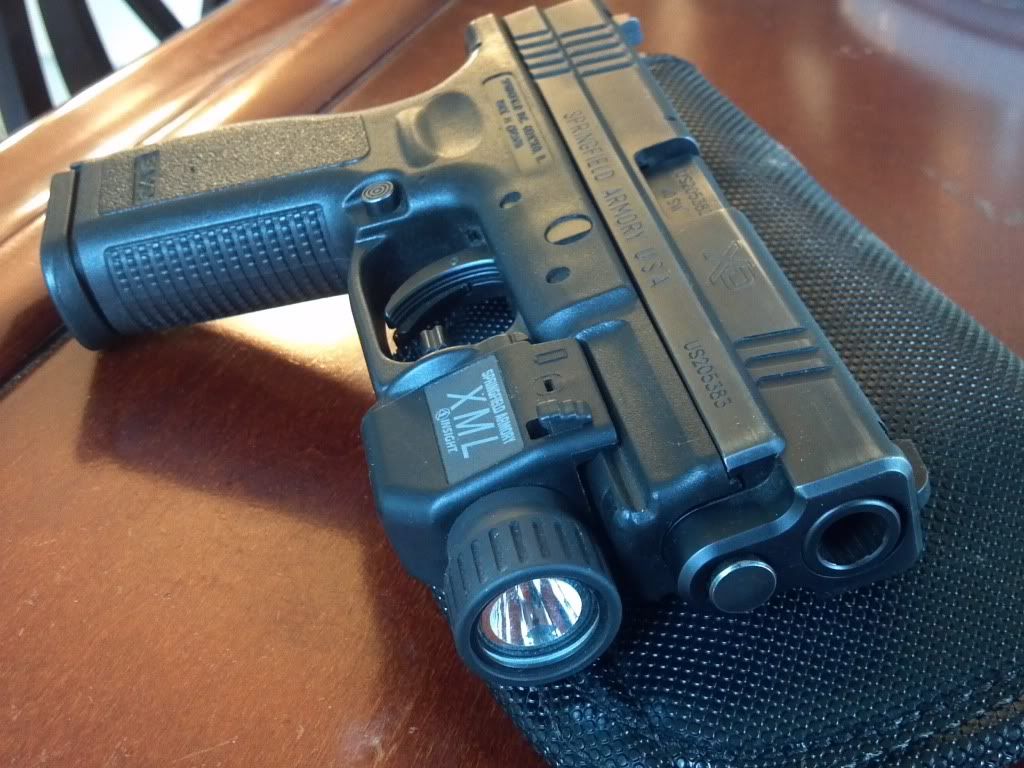
At that time I was using an in IWB (in waistband) holster from Desantis. I dont want to knock that holster, it is incredibly comfortabe, and well made. The only problem is to carry on the hip you need to buy pants 1-2 sizes too big. To carry at the small of the back works well, but you cannot sit down as the gun sticks straight out. This holster was out of the question when riding the motorcycle as well for this reason. My second holster purchase for that gun was another Desantis, this one a leather outside the waistband. Another fine holster, but much harder to conceal. It can be hidden under a t-shirt, but there is a noticeable bulge. The average person wouldn't notice, but it is there. This holster is excellent for carry under a jacket or sweatshirt, but summer is here and that is not gonna work too well. The major downside I haven't mentioned yet is that I can't utilize any of my lights or lasers.
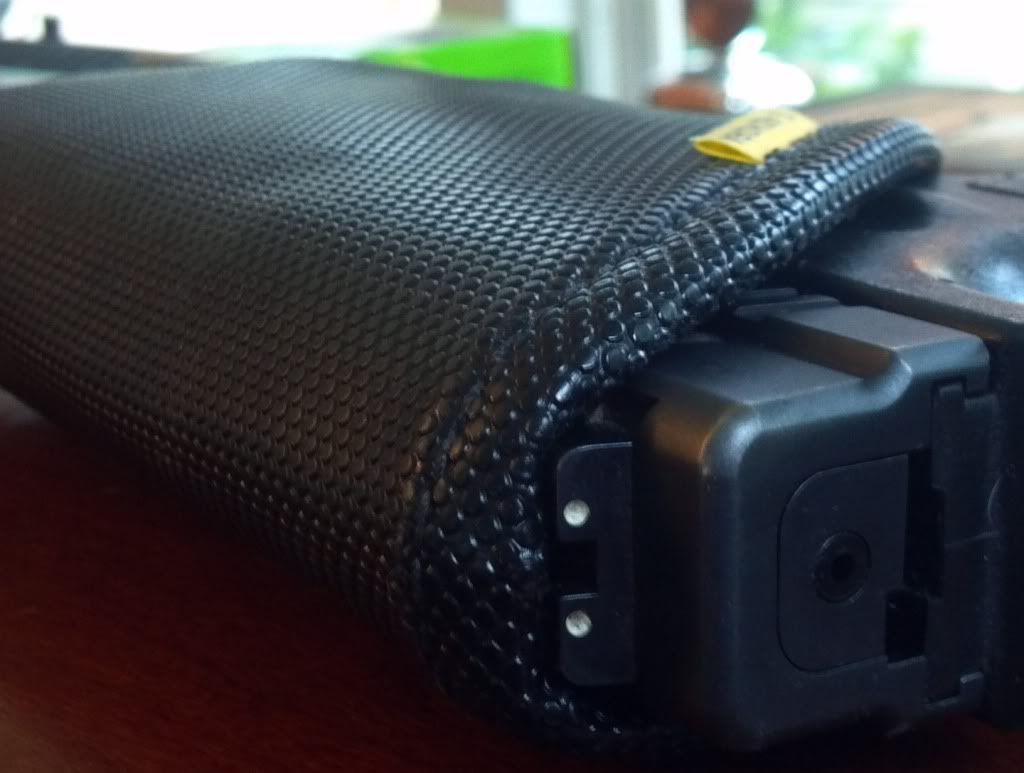
I recieved an email from Alan (presumably the owner) within a day, thanking me for my order and my inquiry about the 1911 holster. He gave me the model number for the holster I would need, and told me to reference the email for a free mag holder for my trouble. I was amazed, it really was no trouble at all. So about 5 days later my XD holster arrived, with a personalized note from Alan. First impressions are very positive, high quality construction and nice look. I ordered the model to fit my XD 40 with a 4 inch barrel and light modification with the reinforced top. On my first try I actually had to put the holster in place before I buttoned up my jeans, it was that grippy. Once in place, it would not budge, draws nicely and had a good feel IWB. The only downside, my light didn't fit, The gun alone works just fine, but it was too tight with the light attached. I figured I must have ordered the wrong size, so I double check the part number. No luck, I ordered the right one and it doesn't fit. So I email them and used the holster without the light for the time being.
During daily carry it worked great, deep concealment even on the bike, and really secure. About two days later I recieve an email from Alan. He apologized for the problem and said it was most likely due to the reinforced top option. It stretches the material wider, making the clearance on the bottom smaller, only allowing the smallest of lights and lasers. He went on to apologize for the issue, and said he would send out a replacement that would work better. As far as the first one I got, he said to keep it in case I had a friend who could use it or I wanted to carry without my light. I was blown away by this, by far the best customer service I have recieved in a long time.
A few days later my replacement arrived, and it works great. The only downside is without the reinforced top, reholstering is a little tougher. A minor sacrifice to make for having my light at the ready. I suppose it's the draw that really counts anyway. I have carried with this holster for about a week straight and it has not so much as budged once. Draws cleanly and easily, and is very comfortable as I can put it wherever I want regardless of what I wear. The biggest surprise of all, was the 1911 holster included in the package. A free gift to make up for the inconvenience, what an amazing company. Now I really can't wait to get my 1911. Remora has certainly gained a customer for life.
http://remoraholsters.com/
Thursday, May 17, 2012
Wednesday, May 9, 2012
Retrieveable Ammunition
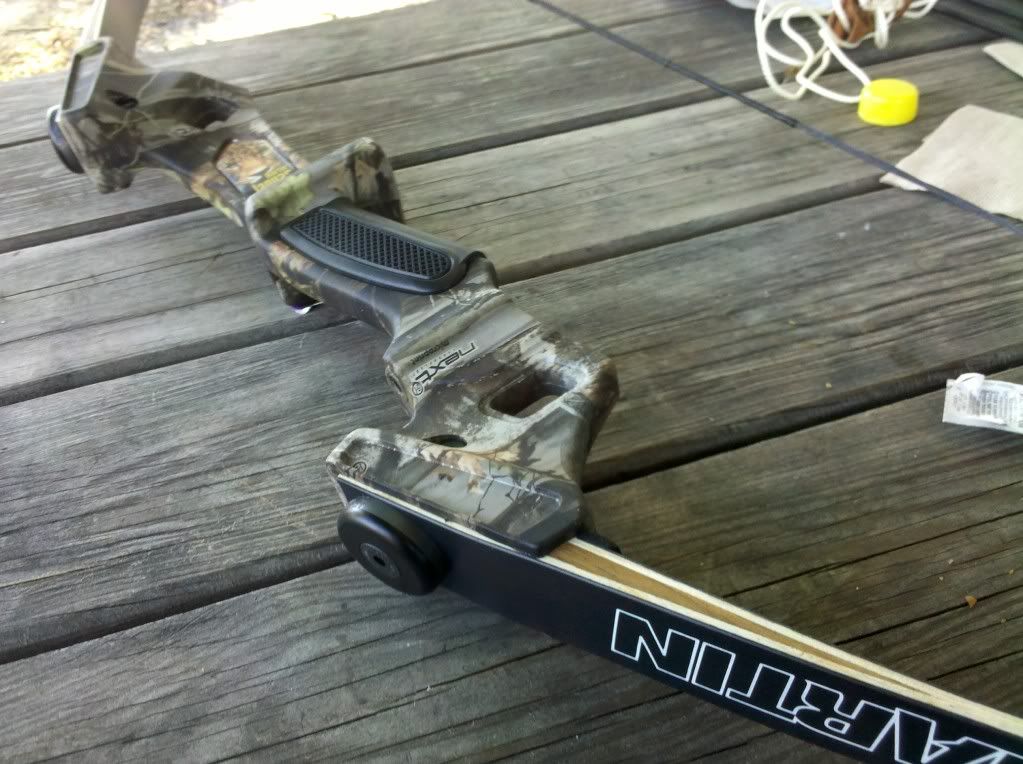 Guns are great survival tools, but they do have their drawbacks. They are loud, require cleaning, and use ammunition that cannot be retrieved after use. They are certainly a large part of my survival plan, but I'm planning for the long term. I would love to tell you that my attempts at building a bow went swimmingly, unfortunately this is not the case. If I were less proud I would post the video of my bow breaking on the first draw. Thankfully Cabela's still stands.
I went with a Martin Jaguar three piece recurve. I didn't have any particular brand in mind but I wanted the three piece recurve because it can be broken down and put into a backpack. A compound bow or a crossbow would definitely be superior in accuracy and power, but this recurve is lighter and breaks down more easily. I also really wanted to build my skills without sights. After all, any improvised bow that I make will be without them.
Overall it is a great bow, very reliable and simple to use. The only downside is the arrow rest it came with, a friend got me a much better one as a gift and it has made a huge difference in accuracy. With a 50 pound draw it can be a challenge for someone smaller but you can untwist the string a bit to lower the draw weight. ( thereby lowering the power as well ) It also has the ability to attach sights and a quiver should I choose to at some point. The entire bow breaks down to about 24" with an allen key, and fits easily in my pack.
Tuesday, May 1, 2012
Build a Smokehouse

Smoking meat has been practiced for thousands of years as a way to preserve meat unrefrigerated for an extended period of time. It's also quite tasty. Now sure I could've just gone out and bought a smoker, but I like to improvise. My idea was to build a cold smoker, so that I could smoke cheese as well as meat. For this project you will need a wooden box of a fair size, a pipe at least six inches in diameter, a shovel, and a pot lid at least sixteen inches across. I'm using the lid off of my charcoal grill. The idea is to build a Dakota stove with a chimney leading into the wooden box. A Dakota stove is simply two holes with a tunnel dug between them. Build a fire in one and it will pull air through the tunnel. This is traditionally done so that a campfire cannot be seen from any distance away. Very important if you're trying to stay hidden in big sky country. The reason I'm using this method is that a smoke house is usually built into a hill, I do not have a hill.

 Start by cutting a hole in the bottom and top of the box, being sure that the one in the bottom is larger that the top. Save the cutout from the bottom and use it to cover the upper hole. Select the location for the smoker. Dig a hole a distance away matching the length of the pipe you have, dig a second smaller hole about a foot away from the main fire hole. Dig a tunnel towards the bottom of the hole about six inches in diameter between the two for the air inlet. Now dig a trench between the smoke house and the fire hole deep enough to bury the pipe. Bury the pipe under at least a few inches of dirt. (Place a branch on top to keep it from getting stepped on and crushed) The soil acts as a heat sink, cooling the smoke as it moves through the pipe. A cold smoke allows you to cure without cooking, important for sausages and cheese. If you do have a hill, dig out a fireplace and run the pipe just like a chimney up to the smokehouse.


When its all done start a roaring fire in the main hole with the lid off. Charcoal works best, but any dry hardwood works. Avoid soft woods like pine and cedar, they can deposit soot and some pretty nasty stuff, they will definitely ruin the meat. While you're waiting on the fire, soak hardwood chips in water, at least a half hour. Soaked chips produce more smoke and keep the fire from getting too hot. Any hardwood chips will work but some are better than others for flavor. I prefer hickory and apple, maple and oak give nice flavor as well. Chips can be purchased in the grilling section at the store or you can chop them yourself, if you have a wood chipper even better. For my last smoke I did a combo of store bought hickory and maple I chopped myself. By now the coals should be ready, hold your hand over the fire pit, if you can't count to five without pulling your hand away it's hot enough. Pile a big handful of wet chips in the middle of the coals and cover the fire hole. The chimney being on top and the air inlet on the bottom should make it draft easily, if you get smoke out of both holes try blowing in the air inlet. Adjust the opening on top of the box using the cover you cut out of the bottom. The idea is to keep as much smoke in, while still allowing the draft to work.
For the inside of my smoker I use cooling racks that are normally used for baking, I also hang meat inside. For this BBQ im smoking slab bacon, one whole chicken and about ten drums. I smoked this batch for about four hours, adding chips and rotating the meat every hour. After the smoke, grill and add your favorite sauce.
Wednesday, April 25, 2012
Know your Plastics

Plastic is one of the most common items in the world. We make everything out of it, but not all plastics are created equal. Some are good, most are bad. If you turn over any plastic item it should have a recycling symbol with a number in it. Occasionally this number will not be there, unless it says PP in the symbol in place of a number it should be discarded. The number system identifies the type of plastic, PP denotes polypropylene, which is food safe. If there is no identification, assume the worst and throw it away. Plastic products are full of chemicals, many can leech into food and water, some simply deposit chemicals like BPA (Bis phenol-A) on everything they touch. Most of these chemicals are long term dangers, in a survival situation, use whatever you have to. In the case of prepping food and water for said survival situation, keep these things in mind. It is a good habit to be in, just in case the apocalypse never comes, it would be nice to live to a healthy old age.
#1 PET (Polyethylene Terephthalate) Not food grade, avoid if possible.
Commonly used in soda bottles, water bottles, cooking oil containers. Should be avoided for anything other than water. They can leach antimony and phthalates. Not really any short term danger but not good for food storage, especially acidic contents.
#2 HDPE (High Density Polyethylene) Food grade, safe to use.
Commonly used in milk jugs, plastic bags, and garbage cans. This is the most common plastic you will find. It's widely used in the food service industry. Generally the big blue plastic barrels everyone uses for emergency water are made of this material as well.
#3 PVC (Polyvinyl Chloride, aka Vinyl): Not food grade, avoid if possible.
Commonly used in condiment bottles, shower curtains, Saran wrap, and toys.
Can leach lead and phthalates and other nasty chemicals. Can also release toxic gases when heated or exposed to chemicals.
#4 LDPE (Low Density Polyethylene): Food grade, safe to use.
Commonly used in grocery bags, food containers.
#5 PP (Polypropylene) Food grade, safe to use.
Commonly used in Gladware, water bottles and bottle caps.
#6 PS (Polystyrene, aka Styrofoam): Not safe, do not use.
Commonly used goddamn everywhere.
Can leach carcinogenic styrene and estrogenic alkylphenols. It's also about the worst thing for the environment on this list.
#7 Can be a variety of plastics, some are safe, most are not. If it doesn't specify, avoid.
PC (Polycarbonate) Avoid at all costs, it can leach Bis phenol-A (BPA). Also commonly used in thermal receipt tape so avoid that as well.
ABS (Acrylonitrile Butadiene Styrene), S. AN (Styrene Acrylonitrile), Acrylic, and Polyamide fall into this category too. They are safer, but not great. Some require a bit more research as well before I would trust them.
New plant-based, biodegradable plastics like PLA (Polylactic Acid) also fall into the #7 category and are food grade.
Subscribe to:
Posts (Atom)